Friday, December 30, 2011

2011 Running Year in Review


As I was thinking about the year gone by, as far as running, I thought it would be a good idea to put down my reflections in my blog. It was definitely a big year for me, so here is a basic summary of what made it so big, the highs and the lows, the daily grind and the new adventures.


First of all, the numbers. In 2011 I ran 3,197 miles (plus whatever I run Dec. 31), which might sounds like a lot but I'm sure a lot of people will be surprised it's so low. I ran 18 races, which break down as follows: 9 ultras (1 48-hour, 2 24-hour, 3 6-hour, 1 100-mile 3-day race, 1 50-mile and 1 50-km), 3 marathons, 4 half marathons, and 2 5-mile races. I got four ultra wins, which will at least get me onto UltraRunning Magazine's year-end list (BUS 6-Hour, 3 Days At The Fair 48-Hour, Pioneer Memorial 3-Day 100-Mile Trek, North Coast 24-Hour), and 1 tie marathon win (The July 4th Marathon, with Dennis Ball). All of the half marathons and two of the marathons were on the calendar of the incredibly suucessful and popular Holiday Marathons. I set two PR's (marathon and 48 hours), and three that were pretty darn close to PR's (6 hours, 5 miles and 24 hours). I won the New York Ultrarunning Grand Prix for the third time. Oh, and one American record and one national championship.


Not bad, considering that the year started on a low point in Phoenix, with me having pulled out of the Across The Years 48-hour race on the last day of 2010, a day earlier than planned, with a strained achilles. Fortunately it wasn't serious, and with a little icing and resting I was able to get back to normal training before long.


But I think it's fair to say the highlight of the year was 3 Days at the Fair 48-hour race, May 13-15, where I set a new American record (just ratified by USATF!) by almost nine miles, a total of 257.34 miles, which is also a world-best for 2011! No need to rehash the story when I've already written about it, but it was just a race when everything went perfectly according to plan. But I'll repeat my big thanks to RD Rick McNulty, Lydia Redding for crewing, my PT Jack Mantione, additional help from Sabrina Moran's family, and to Mike Arnstein and Mike Oliva for throwing me the awesomest bash ever!!!


Besides that, of course winning a second 24-hour national championship in three years at North Coast in Cleveland was another big highlight, with 153 miles. I'll get that PR yet!!! But it officially puts me back on the U.S. team for the 2012 world championships in Poland in September. Very much looking forward to that! My Boston Marathon PR was also very exciting. People who know me well know i'm not too concerned about my marathon times, but it really would be nice to get under 2:50! Maybe in 2012.


The one other race that I am very proud of, that many might have overlooked, was the Pioneer Memorial Trek, 3-day 100-mile race. It took place just two weeks after my 48 hour, and I wasn't sure if I'd be recovered enough to run it at all, but I knew I wanted to if at all possible because of the historical significance to the race, the fact that it honors Ted Corbitt and the other members of the Pioneer Club. The race has been held every two years since 1981, but this could be the last one, unless Rich Innamorato changes his mind, which I hope he does. But aside from some foot pain, I was feeling ok, so I gave it a shot, and I not only finished, but I won, winning each day's leg. And that was my third straight victory for that race.


I only ran two NYRR races in 2011, both 5-milers. But I was very happy with the Team Championships in August, where I came close to a PR - not bad for an old man! Shows I still have some speed left.


So for the lowlights, aside from the forementioned Across The Years just before New Year's, the big crash was without doubt the Back On My Feet Lone Ranger 24 hour race in Philadelphia in July. There I lacked the mental focus needed to deal with the heat and the somewhat unfamiliar situation of a long 8-mile loop. But not a total loss, as I did learn a few things from my mistakes, not to mention that it was a fundraiser for a very worthy cause.


The other lowlight was the cancellation of the 2011 world championship 24-hour race. After the 2010 race in Brive, it was announced that the 2011 race was confirmed for Brugg, Switzerland. In late 2010 the organizers in Brugg pulled out when they apparently had trouble getting the funding for the race, and the IAU couldn't find a replacement. It was a real shame, and a black mark not only on the Brugg organizers, but on the IAU.


Besides the races, I enjoyed some very fun group long runs, a loop around Manhattan, or a tour of the bridges of Manhattan, or the A Train from end to end. I hope to do a lot more of these in 2012.


But the thing that really stands out for the year is all the new friendships I made, or the recent friendships that got stronger. There are a lot of young, enthusiastic runners out there in New York, whether it's the Dashing Whippets or Dennis Ball's Tri Team, not to mention the Mikes and The Holiday Marathons, or the many other runners I got to know over the past year. The running future in New York looks very, very bright! Of course that is not at all meant to diminish my old friends, and "old" friends (they'd be the first to admit! lol). There's such a great community of runners here, I'm really looking forward to sharing the next year with them all!


So what exactly will I be sharing with them? The only race that's set in stone is the 24-hour world championships in Poland in September (hopefully it won't be cancelled). I will probably run the 3 Days at the Fair 48-hour race again in May, will possibly go down to Oklahoma in October to run 24 The Hard Way. I would love to run Badwater again if I can scrape together the dough. Locally I'm not entirely sure what's on the schedule, except for Caumsett, which I will probably run again. I'll probably do some marathons of halfs with The Holiday Marathons, and I would like to find a fast road marathon to try for a sub-2:50. Probably a couple of NYRR races, probably not the NY Marathon. I'm going to look for other races put on by smaller organizations. A lot of "probably's" there, but that's the scoop. I will also be putting on the RD cap with a 100-mile run in June, small and low-key, but promises to be a lot of fun (because I promise it).


And finally, a big thank you to all of you who are reading this now! It always amazes me that anyone cares what I have to say. Best wishes to you all for the new year - stay happy and healthy!


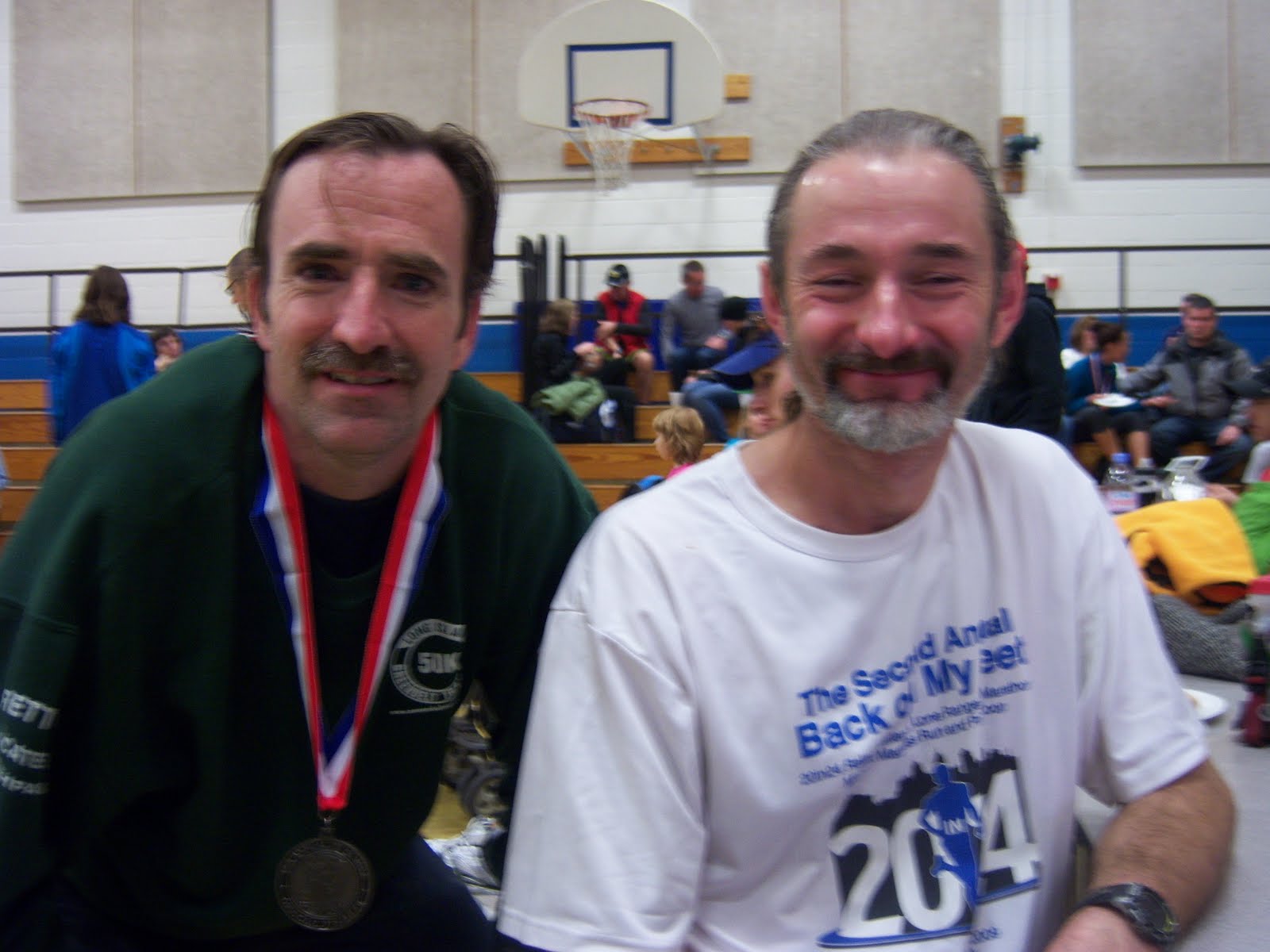
Pics: 1. Breaking the 48-hour record at Three Days at the Fair in Augusta, NJ; 2. Connie Gardner and me, 24-hour national champions at North Coast in Cleveland; 3. Hopkinton in April; 4. Dennis Ball and me after The July 4th Marathon; 5. The 10 runners who started the A Train run in the summer - 6 of us ran the whole 34 miles.

Wednesday, December 28, 2011

Bridge of the Week #75: Boston Road Bridge


This week's bridge (even though it's a couple weeks late) is the last bridge I will be covering over the Bronx River - the Boston Road Bridge.


This bridge is not to be confused with the bridge farther north up Boston Road, over the Hutchinson River, which is called the Eastchester Bridge. This bridge is just south of the Pelham Parkway intersection, and west of the Bronx River Parkway, at the eastern entrance of the Bronx Zoo. Zoogoers must cross the bridge on foot to enter the zoo from the parking lot. Boston Road itself, in fact, has restricted vehicular access here and through the zoo, before regular public access resumes at E. 180th St. But you can very easily run, or walk here from Bronx Park East and the Pelham Parkway (very near the elevated subway station for the 2 and 5 trains). But as it's the entrance to the zoo, there are a lot of pedestrians, and it leads only to the zoo entrance, so not really a great running bridge. But it is near Bronx Park, which has a beautiful greenway north of Pelham Parkway, and Pelham Parkway, which has a nice greenway as well.


The bridge itself is a basic concrete bridge, I don't have the numbers on it, but you can get an idea of its length and appearance from the pictures above. One source lists it as being built in 1920, which sounds good to me. I'll mention here as well that Boston Road, called Boston Post Road north of the NYC line, was obviously so named because it was a road built in the 1700's to carry mail to and from Boston.


As I mentioned, this is the last bridge over the Bronx River that I will write about. However, according to Google Maps there are two other bridges over the river in the New York Botanical Garden, whic carry a roadway, named Bronx Park Road, over the river twice as it loops through the park. But the Botanical Garden charges admission, and since this is meant for runners' information, and runners are unlikely to pay to go into a park to do their run (and in fact I admit I've never been into the Botanical Garden), I won't be writing about those two bridges.


And also since this is the last time I'll mention the Bronx River, it's a good time to give a little trivia note. It's well-known that the name Bronx comes from Jonas Bronck, a Swedish-born Dutch settler who established a farm near the river in 1639. When he died in 1643 the river, named Aquehung, or "River of High Bluffs," by the Mohegan, became known as Bronck's River (later Bronx River). But the name Bronx was not associated with any area of land for centuries. The villages in what is now The Bronx all had their own names and were part of Westchester County until 1874 when New York City (just Manhattan at the time) annexed the villages west of the Bronx River, but it was all still named simply New York City, and New York County. In 1895 the city annexed the rest of what is now the Bronx, but it was still just called New York City, and New York County, until 1898 and the consolidation of Greater New York - the annexation of Queens, Kings and Richmond Counties, which became the boroughs of Queens, Brooklyn and Staten Island. Only then did the northern borough receive its name, after the river that runs through it. (And it was only in 1914 that the borough achieved separate county status from New York County, and became Bronx County.) All that is a long way of saying that the borough was named after the river, more than actually after Mr. Bronck himself.


Sorry, one more trivia note about the river: it is the only true river in New York City, and not a tidal body of water. So there.

Thursday, December 8, 2011

Bridge of the Week #74: Goethals Bridge


This week's bridge is the Goethals Bridge, which spans Arthur Kill between Staten Island and Elizabeth, New Jersey. It is a steel-truss cantilever bridge with a central span of 672 feet and a total length of 7,109 feet, with a clearance of 140 feet above the water. It carries four lanes of traffic, two in each direction, and it has sidewalks on both the north and south sides that have been closed for many years.


Of all the bridges in the city, this has one of the more interesting histories and an interesting future. As far back as the 1860's a bridge or series of bridges have been proposed between Staten Island and New Jersey. But in 1924, with the increase of motor vehicles and the economic advantages to linking Staten Island with New Jersey, the states of New York and New Jersey passed legislation allowing construction of two bridges to take place, one near the north end of the island to Elizabeth, NJ, and one near the south end to Perth Amboy, to be carried out by the new Port Authority of New York and New Jersey. The Port Authority was already constructing the Holland Tunnel as the first auto connection between the two states, and these two bridges would be the Authority's first bridges. Both the Goethals Bridge and the Outerbridge Crossing were designed by John Alexander Low Waddell and opened on June 29, 1928. The Goethals Bridge (usually pronounced "Goth-" as in "gothic", sometimes I've heard "Go-", rhyming with "toe", which I believe may be more accurate, I've never heard it pronounced as if it were German with an umlaut and a hard "t", so don't try to be clever and pronounce it that way) was named after Major General George Washington Goethals, who supervised construction of the Panama Canal and was the first consulting engineer of the Port Authority. Sadly, he died in January of 1928, and didn't live to see the bridge opened.


Both bridges were built with pedestrian access. The walkways on the Outerbridge were eliminated in 1963 according to one source, to allow widening of the four traffic lanes. The walkways on the Goethals are still there for the most part, but fenced off. The south walkway I believe is partially deconstructed on the New Jersey end, but I've read reports that it's possible, even easy, though illegal, to hop the wall on the north side and cross. I haven't done this, nor do I recommend it. Access to the walkways was available, and the fenced-off entrances can still be viewed, west of the Forest Avenue intersections with Western Ave. (south walkway) and Goethals Road North (north walkway). In Elizabeth, the entrance appears to be west of the New Jersey Turnpike at Trenton Ave. But seriously, I've never crossed on foot, and I'm not saying you should. I've never been in that area of Elizabeth on foot. On Staten Island, there's not much for houses or businesses in the immediate area, but to the east is the neighborhood of Mariner's Harbor. But around there, most people get around by car or bus, and there's not much of interest to runners.


The Goethals charges a toll for drivers, but it was not self-supporting financially until the Verrazano-Narrows Bridge was opened in 1964, with which the Goethals is connected by means of the Staten Island Expressway. With the added traffic, and the fact that its traffic lanes are only 10 feet wide, making it dangerous for trucks and buses (and just downright scary even in a car), the bridge has been labeled "functionally obsolete," which is fine, since it has less than 10 years left of its lifespan anyway. Ideas were discussed about rehabilitation, possibly adding a twin bridge just to the south, but it was decided to build a completely new, six-lane cable-stay bridge and tear down the existing bridge. One article that I found from a few years ago gave a 2016 completion date, a more recent article said 2017. Another, still more recent, said that the President's latest budget was cutting out infrastructure projects such as this, so I'm not so optimistic. But the artist's renderings of the proposed bridge look beautiful, and it would include pedestrian walkways. On the downside, Staten Island Borough President James Molinaro wants to sell naming rights to the new bridge like many sports stadiums and football bowl games. So we could end up with a Qualcom Bridge or a GoDaddy.com Bridge. Let's hope this insanity is limited to his head only.


Pics: 1. Aerial view of the Goethals Bridge, courtesy of the Port Authority; 2. Ground view looking towards New Jersey from Goethals Road North; 3. The fenced-off north sidewak entrance; 4. The north walkway, as seen by leaning over the wall; 5. Stairway leading to the south walkway.

Sunday, December 4, 2011

College Football Playoff

Now that the regular season and conference championship games are over, I once again came up with my ideal playoff scenario. I can't imagine anyone objectively defending the BCS system or even the existence of the BCS. Originally establishing itself ostensibly with the worthy goal of setting up a national championship game to determine a definitive number one team. Previously, the bowl games chose participating teams based on their own interests, plus there were conference affiliations that often prevented a number one versus number two game. You might remember that the Big 8 champion went to the Orange Bowl, Big 10 and Pac 10 to the Rose Bowl, Southwest Conference to the Cotton Bowl, Southeast to the Sugar Bowl. As a result, there wsa sometimes a controversy over who was number one at the end of the season, and sometimes the AP and UPI (later the coaches' poll) chose different champions.


So the BCS was supposed to end the controversy, but if anything the controversies have increased, over who should be chosen for the championship game. Sometimes, like this year, one team is a clear choice with several teams possible for the second spot, sometimes there is no clear choice at all, and sometimes the clear choice is left out entirely, like the example I always bring up, the 2008 Utah Utes. Utah and TCU were the only undefeated teams at the end of the regular season, but not being from one of the "BCS Conferences", neither one received any serious consideration for the championship game, the excuse being that since they were from "small conferences" they haven't played a strong enough schedule. But both teams' play, especially Utah's, throughout the season showed that they were as strong as any other team in the country. One-loss Ohio State and two-loss LSU went to the championship game that year. Utah beat Alabama in the Sugar Bowl by two touchdowns.


There are many problems with the BCS, the most glaring being that it has chosen six conferences as members, supposedly the strongest conferences. Generally they are the stronger conferences, but in recent years no one can honestly say that the Big East or even the ACC are stronger than the Mountain West or the WAC (at least before the defection of Utah), or this year Conference USA. No matter how strong TCU or Houston or Boise State actually are, it's predetermined before the season even starts that they will have no chance of playing for a national championship. This is also the greatest hypocrisy of the BCS, that it purports to have the championship decided "on the field, not in the polls", but those who have displayed "on the field" that they have been better than their opponent every week are passed over for a team that has displayed "on the field" that another was better than them on at least one particular day. And then the undefeated team is supposed to get on their knees with thanks that they were selected to "a BCS bowl". I won't even get into the problems with the methodology of the BCS poll.


People have been proposing some changes that include a four or six team playoff system within the BCS. The only real choice is to totally dismantle the BCS. It serves no positive function, and only takes money from the bowl games and from tv advertisers, money that could go back to the universities. It has planted itself pretty securely and may be tough to dislodge, but maybe by pulling it up from its roots (the advertisers) it could be done.


So on to the good part - my playoff system. It would be a 16-team standard playoff that would automatically include ALL 11 conference champions and five at-large teams that would be chosen and seeded by a reliable and accountable independent commission. An independent team, such as Notre Dame, could be chosen as an at-large team. This system ensures that an undefeated team has a chance at a national championship. The games could be played at the higher-seeded team's stadium, except for the championship game, which could be a Super Bowl-like game. Teams not chosen for the playoffs could still play in bowl games.
The conference champions for 2011 are:
ACC - Clemson
Big East - West Virginia (actually a 3-way tie with Cincinnati and Louisville, but WVU is chosen by the BCS and for argument's sake is chosen here as well)
Big Ten - Wisconsin
Big 12 - Oklahoma State
Conference USA - Southern Miss
Mid-American - Northern Illinois
Mountain West - TCU
Pac-12 - Oregon
Southeastern - LSU
Sun Belt - Arkansas State
Western Athletic - Louisiana Tech

With no commission yet in place, I have chosen the five at-large teams: Alabama, Stanford, Boise State, Arkansas, Houston. (Note: USC is ineligible for postseason play.)

I have also seeded the teams as follows, based not only on record and conference standing but also to prevent rematches or postpone them as long as possible.
1. LSU, 2. Oklahoma State, 3. Alabama, 4. Wisconsin, 5. Oregon, 6. Stanford, 7. Arkansas, 8. Southern Miss, 9. TCU, 10. Boise State, 11. Houston, 12. Arkansas State, 13. Clemson, 14. Northern Illinois, 15. West Virginia, 16. Louisiana Tech.

If the higher-seeded teams each win the first two rounds, the semifinals would then include LSU against Wisconsin (or Oregon, close call there), and Oklahoma State against Alabama. Now that would be a championship!

Friday, November 25, 2011

Bridge of the Week #73: Saw Mill Creek Bridge


This week's bridge is again on Staten Island - the Saw Mill Creek Bridge. This steel and concrete bridge carries Chelsea Road over the Saw Mill Creek in the Bloomfield area of Staten Island, an area south of the Goethals Bridge, west of the West Shore Expressway, where there are inlets and wetlands off Arthur Kill, the waterway between Staten Island and New Jersey. There are some industrial areas there and a few other businesses, but not much for residences nearby.


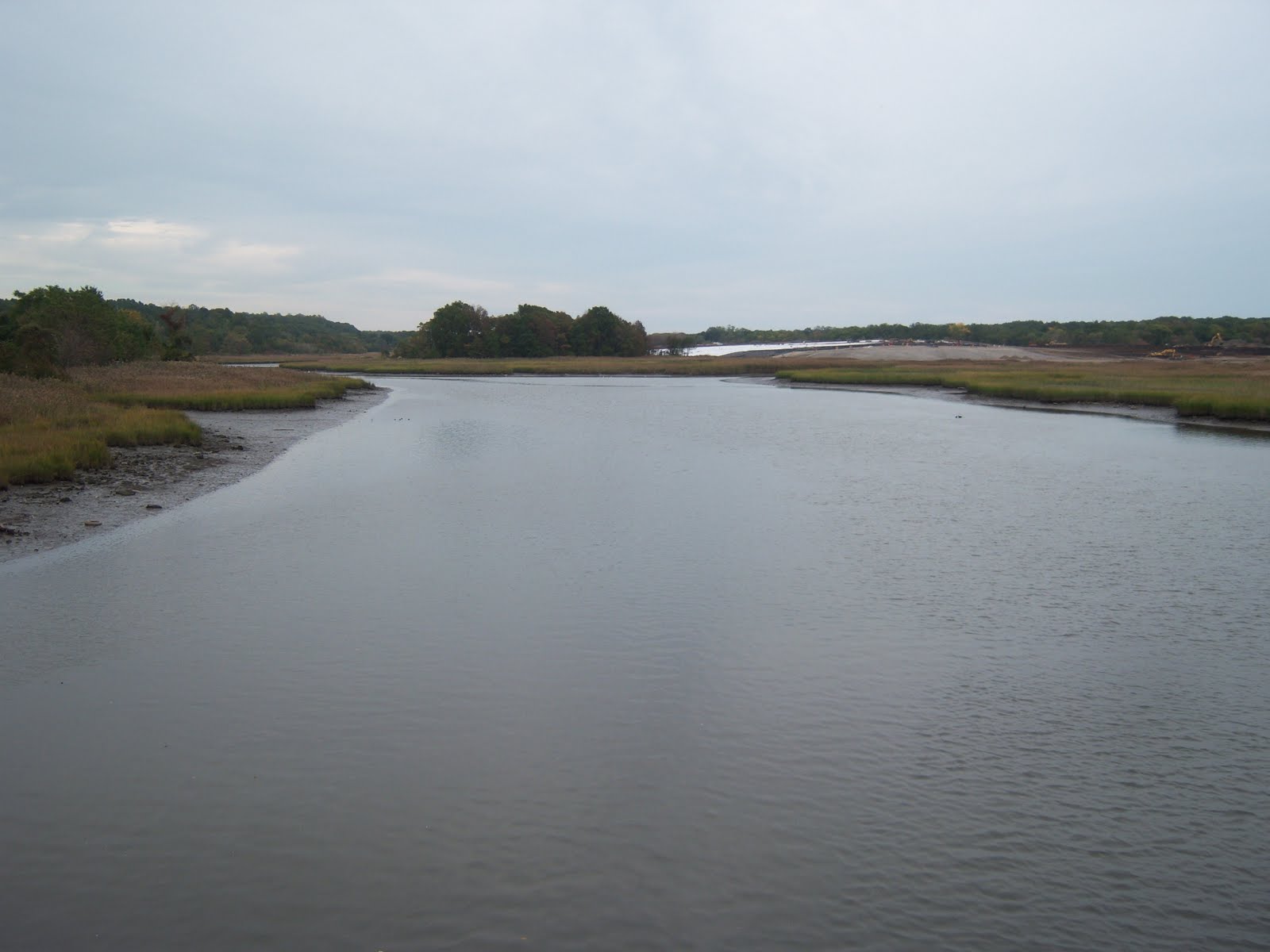
I don't have any stats on the bridge, the first picture above pretty much tells the story of its size. (The second picture is the view west from the bridge.) There are sidewalks on the bridge, but no sidewalks on Chelsea Road leading to and from the bridge. But when I ran it, there was little traffic on the road. While there actually can be some appeal to running on these low-traffic remote roads, I wouldn't think a lot of runners from other parts of the city or the borough would have much interest in taking the bus all the way out here for their run. Unless they happen to want to run all the bridges of the city.

Sunday, November 20, 2011

Race Report: JFK 50 Mile


After years of being told I have to run JFK, the largest ultra in the country with over 1,000 finishers and possibly the oldest continuous existing ultra, I had signed up for the 2011 race. This race started out from a comment by Theodore Roosevelt that all military personnel should be able to cover 50 miles on foot in 20 hours. The first race was held in 1963 under Kennedy's administration.


I rode down to the host hotel in Hagerstown, Maryland with long Island runners George Worth, Jim Morris and Tim Henderson (first pic above). We received some shocking news at the pre-race briefing by race director Mike Spinnler, that the administrator of the Appalachian Trail, Pamela Underhill, not only refused a permit for an additional 500 runners but stated that no permit would be given for the Appalachian Trail after 2012, saying "the runners won't mind not using the Appalachian Trail"!!! What's up with officials refusing or rescinding permits for ultras (as in Morris County, NJ)?!?! Mike is hoping to get a Congressional resolution passed to allow continued use of the trail for six hours one day a year for future races. Please check back with the JFK 50 web site for details and updates.


But back to the race. I hadn't run this race before, and I haven't run any 50-mile race in quite a while, so I really had no idea how I would do. Only the first 15.5 miles is on hilly, tough trails, so I was estimating something between 6:30 (on the very optimistic side) and 7:00. I wasn't planning to worry too much about competition, just to get on the trails, which I don't do too often, step outside my comfort zone a bit and enjoy one of the most celebrated ultras in the country with the richest tradition.


I'm guessing that most people reading this have either run the race or know people who have, so I won't bother with a course description. The weather was good, cold at the start in Boonsboro at 31 degrees, but a forecast high near 50. Once we got on the Appalachian Trail, I understood what everyone meant when they warned me about the rocky trail. Most of it was fine and with some careful foot placement was very runnable, but a few sections were really tricky and tough to maneuver. Still, I was happy with my pace on the trails as I descended the switchbacks on my way to the to the towpath.


And once on the smooth, flat towpath I tried to get into a good road-type pace, hoping to pass some of the runners ahead. It was hard for me at this point to judge my pace, but there were mile markers on the side of the path, so when I did check my pace, I was happy to see it near 7:00 per mile. The scenery along the Potomac was beautiful to be sure, but I was getting a little chilled when the path went into the shade. But it was similar scenery the entire 26-mile length, and after roughly the 30-mile point I wasn't seeing any other runners, so it was getting a little lonely and it was tough to feel like I was making forward progress. The aid stations helped a lot with both of those issues, and they were tended by an amazing bunch of volunteers. So I was counting down the miles on the towpath, even as I did slow down a little the last several miles.


After about a 3:20 marathon on the towpath I finally turned onto the road for the last 8.5 miles, and I felt like I was home, being on pavement again! I was able to pick up the pace a little bit, and I saw a runner a couple hundred yards ahead of me, and I had hopes of catching him. Starting at eight miles to go, mile markers were place alongside the road, allowing me to really feel good about getting near the finish. Still, I was never able to get any closer to the runner in front of me, but I wasn't too concerned with that. Coming off the towpath, I looked to be well on track for a sub-seven hour finish, hopefully under 6:50. But as I neared the finish, I pushed a little more and was looking to take a few minutes off that as well. At this point I have to thank my friend Mike Oliva, an outstanding runner himself, who finished JFK in 2010 in 17th place with a time of 6:44 and I didn't remember how many seconds, because his time became my goal near the finish! The last mile seemed to take forever, but I finally finished in 6:44:24. It ended up being 19 seconds faster than Mike's time, so I do have bragging rights, at least for the time being!


So finishing at the school in Williamsport, the runners had massages, medical help, food and showers, and a lot of opportunities to meet and greet and swap stories, which really is the reward for all the work and pain we put ourselves through!


David Riddle won the race with a new course record time, unfathomable, of 5:40:45. Michael Wardian, continuing his amazing year (not to mention his career) finished a close second, also under the old course record, with 5:43:24. Cassie Scallon won the women's race in 6:31:22 and Meghan Arboghast, at age 50, got second with 6:35:16! Fellow New Yorker and past runner-up Mike Arnstein got 5th place. I was happy to see I just cracked the top 20, getting 20th overall, 18th male, and I was especially pleased to see I was 2nd male master, after Jon Lawlor, who finished 7th. My travel companions George, Tim and Jim all finished in excellent times, George taking an hour off his 2010 time. Many other friends ran and finished as well, too many to mention, but a big congratulations to all who ran! A big thanks to Mike Spinnler and all the staff and volunteers, and of course also to Tim Henderson, Jim Morris and George Worth for letting me tag along with them. And as always, a big thanks to my physical therapist, Dr. Jack Mantione, for helping me get the most out of this old body, and without injury.


Pics (sorry there aren't more): 1. Me, George, Jim and Tim back in NY at the GWB Bus Station; 2. Me and Serge Arbona after the race.

Friday, November 11, 2011

Bridge of the Week #72: Richmond Ave. Bridge


We're back to Staten Island for this week's bridge, the Richmond Ave. Bridge. It carries Richmond Ave. over Richmond Creek, between Forest Hill Road and Arthur Kill Road.


Richmond Ave. here is a busy stretch of six-lane road about a mile south of the Staten Island Mall and just north of the north end of the Korean War Veterans Memorial Parkway (formerly Richmond Parkway). The street runs north-south, and there is a sidewalk on the east side, which appears to get little use. (There is also a sidewalk on the west side, but no sidewalk along the street leading to it.) There is little pedestrian traffic in this area, as indeed most of Staten Island is not at all pedestrian-friendly. Therefore I won't make too many comments, as there is not much here to interest a runner, with the notable exception of an entrance to the Staten Island Greenbelt nearby at the corner of Forest Hill Road and Richmond Ave. The Greenbelt is a large forested area in the middle of the island with a series of hiking - or running - trails, that actually extend, with the help of some on-street sections, all the way to Clove Lakes Park. I admit I haven't explored the Greenbelt much myself, so I can't speak about it too much. Also nearby is the site of the notoriously odoriferous former Fresh Kills Landfill, which was closed for trash duties in 2001, and which is now undergoing renovations to become Fresh Kills Park. Seriously, it has potential.


The bridge itself is just a standard steel and concrete bridge. I don't have stats on it, but it's a low-lying bridge, about 100 or so yards long. You'll notice I didn't even bother to take a picture of the bridge itself. Richmond Creek is part of a series of inlets from Arthur Kill, surrounded by protected wetlands. But don't let that top picture, the view to the east, fool you. This is not a nature lover's paradise. The wetlands are then surrounded by random unplanned development, cookie cutter town houses, and lots of concrete on the ground.